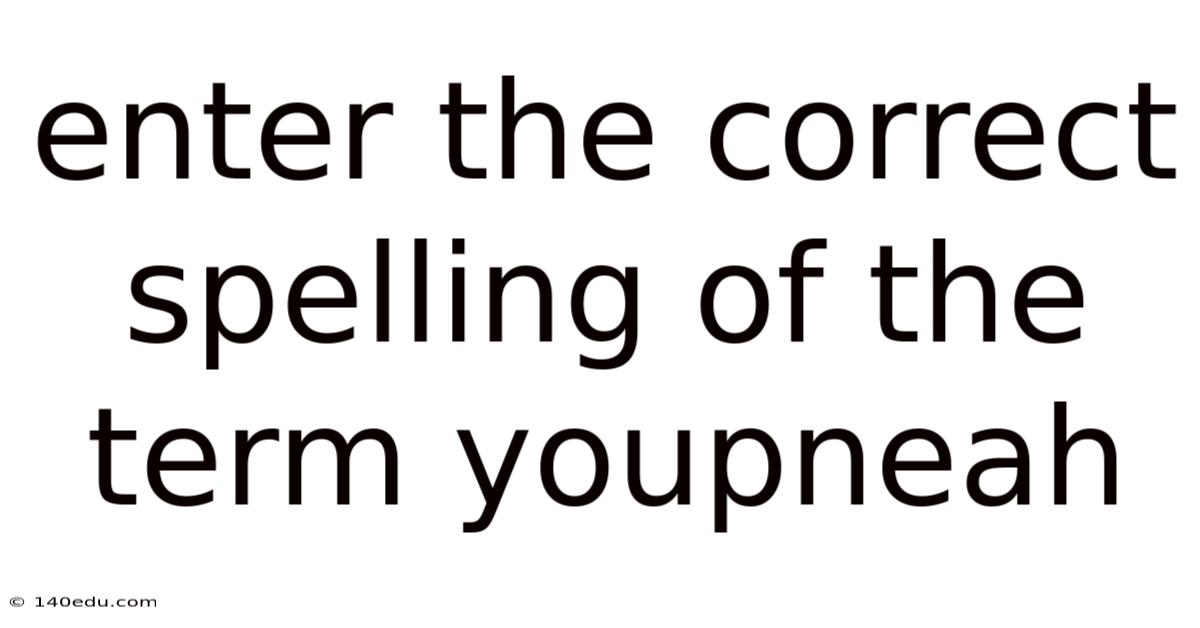
The correct spelling of the term youpneah is eupnea. If you have seen youpneah in a note, search box, spelling exercise, or medical vocabulary list, it is almost certainly a phonetic misspelling of eupnea, the standard term for normal, quiet breathing. Consider this: the confusion is understandable: the word is pronounced roughly as “yoop-NEE-uh,” so writers often try to spell it the way it sounds. The accepted English spelling, however, is eupnea in American English and eupnoea in British English That alone is useful..
What Does Eupnea Mean?
Eupnea is a medical and physiological term that describes normal, unlabored breathing at rest. It refers to breathing that is comfortable, regular, and appropriate in rate and depth for the person’s age and condition. In clinical language, a patient with eupnea is breathing without distress, without obvious effort, and without abnormal pauses or excessive speed.
The word comes from Greek roots: eu-, meaning “good” or “normal,” and -pnea, meaning “breathing.Think about it: ” Put together, eupnea literally means “good breathing” or “normal breathing. ” It is the opposite of breathing patterns that signal illness or physiological stress, such as dyspnea (difficult or labored breathing), apnea (absence of breathing), tachypnea (abnormally fast breathing), and bradypnea (abnormally slow breathing).
In everyday language, people rarely say “eupnea.” They simply say “normal breathing.Think about it: ” But in nursing notes, medical documentation, respiratory therapy, physiology textbooks, and clinical exams, eupnea is a precise and useful term. It allows health professionals to describe a breathing pattern quickly and accurately.
Why “Youpneah” Is Not the Correct Spelling
The spelling youpneah is not standard English and does not appear as an accepted medical term. It is best understood as a phonetic attempt to capture the sound of eupnea. Several features of the word make it easy to misspell:
- The opening sound “eu-” is pronounced like “yoo,” which invites spellings such as you-.
- The “pnea” ending is unusual in everyday English and is often distorted into -pneah, -nia, or -nea.
- The word is rare outside medical contexts, so many people encounter it first in speech or in a spelling exercise rather than in regular reading.
The correct form to enter is eupnea. If a British or Commonwealth spelling is required, eupnoea is also correct. The misspelling youpneah should be avoided in
formal writing, clinical documentation, and any context where precision matters. If you are correcting a note or revising a vocabulary list, replace youpneah with eupnea—or with eupnoea if British spelling is preferred.
How to Use the Word Correctly
In medical writing, eupnea functions as a noun. Also, ” The adjective form is eupneic in American English and eupnoeic in British English, as in “the patient remained eupneic throughout the examination. Even so, a clinician might document that a patient is “in eupnea,” “demonstrating eupnea,” or “breathing with eupnea. ” These forms are more formal than saying “breathing normally,” but they carry the same basic meaning in a clinical setting That's the part that actually makes a difference..
Honestly, this part trips people up more than it should.
The word is pronounced approximately “yoop-NEE-uh.English medical vocabulary is full of Greek-derived terms whose written forms do not match their spoken forms neatly, and eupnea is a classic example. ” That pronunciation explains the persistent appeal of youpneah, but pronunciation is not spelling. The “eu-” beginning looks unfamiliar, and the “-pnea” ending is rare in ordinary conversation, so the word is easy to distort Simple as that..
A few related terms help place eupnea in context. Also, Orthopnea describes difficulty breathing while lying flat. Dyspnea refers to difficult or labored breathing. Apnea refers to the absence of breathing. Tachypnea means abnormally rapid breathing, while bradypnea means abnormally slow breathing. Against that background, eupnea is the neutral, normal baseline: quiet, regular, unlabored respiration.
A Simple Way to Remember It
Think of eu- as the same “good” or “normal” prefix found in words like euphoria or eulogy, and think of -pnea as the breathing root seen in apnea and dyspnea. On the flip side, once that structure is familiar, eupnea becomes easier to recognize and much easier to spell. The false form youpneah may sound plausible, but it breaks the word’s Greek-derived pattern and has no standing in medical or standard English usage Which is the point..
For anyone compiling notes, flashcards, or spelling exercises, the safest approach is to use eupnea consistently and to add eupnoea only when a British spelling is specifically required. If youpneah appears in a draft, treat it as a phonetic error rather than an alternative spelling Still holds up..
Conclusion
Eupnea is the correct term for normal, quiet, unlabored breathing, and eupnoea is its British variant. Youpneah is simply a misspelling shaped by pronunciation. In clinical writing, study materials, and general reference work, use eupnea—or eupnoea where appropriate—and reserve youpneah for the category of understandable but incorrect phonetic attempts Most people skip this — try not to..
